8 Questions to Ask Before Installing Polyurea Floor Coatings
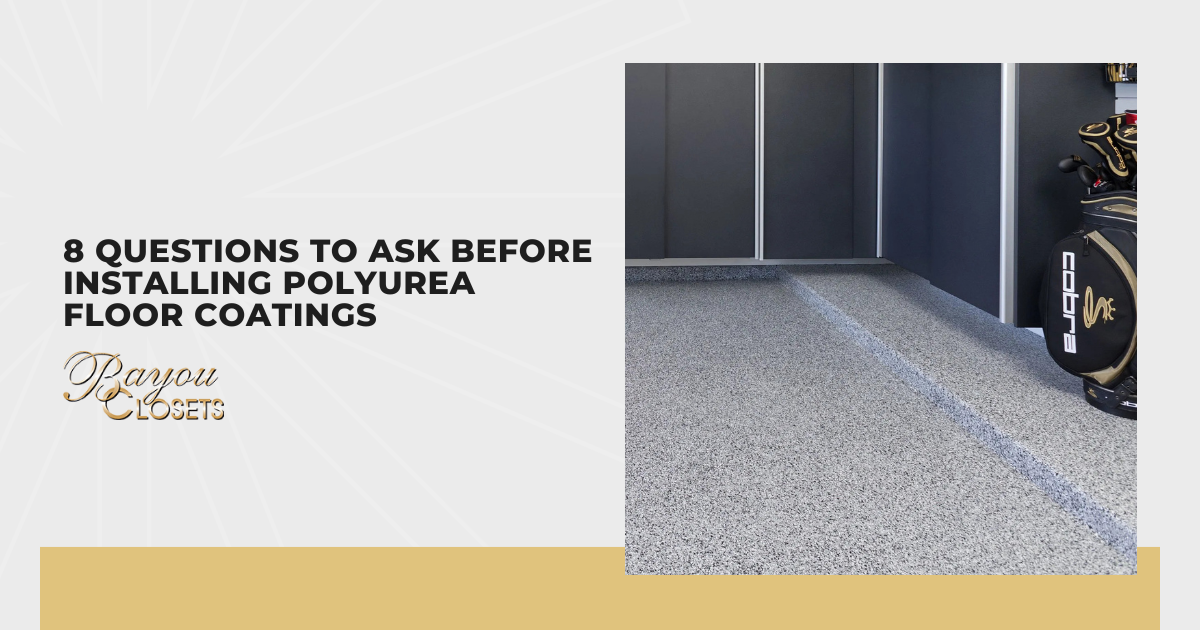
Your garage or shop floor takes a beating from spills, hot tires, and constant foot traffic, so it deserves more attention than it usually gets. A polyurea floor coating gives you a tough, good-looking surface that holds up to daily wear without cracking or staining. Getting it right, though, comes down to what you know before the work begins.
Before you commit to any installer, asking the right questions protects your investment and sets clear expectations. I always tell clients that knowing what to ask, from surface prep and curing time to warranty coverage, puts you in a much stronger position than going in blind. A little due diligence up front saves you from costly surprises down the road.
The wrong install can turn a big investment into a peeling, cracked mess within a year, so a little homework goes a long way. Here are the 8 questions worth asking any installer before you sign off:
- How durable is a polyurea floor coating?
- What kind of surface preparation does my floor need?
- How much will the installation cost?
- How experienced is the installation team?
- How long does the coating take to cure?
- What customization options are available?
- What does the warranty cover?
- How do I maintain my new floor?
Every question below shapes how well your floor performs, and I'll walk you through what separates good polyurea floor coatings from the rest.
How Durable Is a Polyurea Floor Coating?
Durability is the first thing worth pinning down before you spend money on any floor coating. Not every product holds up the same way under real conditions, and heavy loads, temperature changes, and chemical spills sort out the strong options from the weak ones fast. Skip this question and you risk choosing based on how something looks in a showroom photo rather than how it performs after two winters.
Your long-term costs depend heavily on this answer. A coating that chips or stains early puts you back on the phone with a contractor sooner than you planned, and that second visit costs far more than asking the right question upfront. I've found that buyers who ask about durability early end up with floors that actually match what their space demands. Compare products honestly against each other and against how your garage or shop actually gets used.
Push your installer for real specifics, not just a product name or a vague claim about quality. Ask how polyurea floor coatings hold up in your climate and under the kind of loads your space sees regularly. Confident crews with hands-on experience won't hesitate to give you concrete answers.
What Kind of Surface Preparation Does My Floor Need?
Most buyers focus on color choices and coating options and never think to ask about prep, but prep is what actually determines how long the coating lasts. Even a top-tier polyurea floor coating will start to fail if the slab beneath it wasn't properly cleaned, dried, and profiled first. Early peeling almost always traces back to a prep step that got skipped or rushed.
Older concrete with oil stains, hairline cracks, or moisture issues needs more work before anything gets applied. If you don't ask, you won't know what your specific floor requires, and plenty of installers won't bring it up unless you push them. A good crew treats prep as a non-negotiable part of the job, not an optional add-on.
I've seen firsthand what happens when prep gets cut short to save time, and it never ends well for the client. Asking this question up front tells you whether you've found someone who respects the process or someone looking to finish fast and move on.
How Much Will the Installation Cost?
Cost questions aren't just about budget. They're about knowing enough to read a quote accurately. Two bids for the same garage floor can differ by hundreds of dollars depending on what's included, and the cheaper one isn't always the better deal. Without understanding what drives pricing, it's hard to know what you're actually comparing.
Square footage, slab condition, prep requirements, and finish all move the number up or down. A low bid might be leaving out crack repair, a moisture barrier, or a quality topcoat. Once the work starts, those missing line items become surprise charges, and that's a frustrating position to be in. I tell clients upfront that a transparent quote is one of the clearest signs of a trustworthy contractor.
Ask for a full breakdown before you agree to anything. Crews who can walk you through every cost clearly tend to be the same ones who handle the job with that same level of care. Vague quotes deserve follow-up questions, and if a contractor can't explain their pricing, that alone tells you something worth knowing.
How Experienced Is the Installation Team?
Polyurea cures fast, and that speed leaves almost no margin for error during application. General flooring experience doesn't automatically translate to polyurea knowledge, since the material behaves differently, reacts to temperature changes quickly, and demands precise timing at every stage. Before your floor goes in, you want to know the crew has done this specific job many times before.
A team with real experience understands how coating thickness, ambient conditions, and slab variables interact. Someone newer to the material might produce a floor that looks fine initially but starts showing problems within a year. Past project photos and references give you something tangible to evaluate rather than just taking someone's word for it. I've personally reviewed plenty of installs where the finished product looked clean but failed within months because the crew lacked real material knowledge.
I always tell clients not to hesitate when asking for proof of experience. A crew confident in their track record will welcome those questions without getting defensive. One that dodges or gets vague usually has a reason to.
How Long Does the Coating Take to Cure?
Cure time matters more than most people realize, and getting caught off guard by it can actually damage your new floor. Putting vehicle weight on a coating before it's fully set compromises the bond, and you may never know it happened until the surface starts to show stress. Ask this question before the job starts so you're not guessing when it's safe to use your space again.
Polyurea cures faster than older coating options, but the exact window depends on the product formula, coating thickness, temperature, and humidity on the day of installation. Your installer should give you specific timelines for foot traffic and vehicle traffic separately, not just a rough estimate. Clear numbers let you plan realistically instead of assuming.
If an installer can't give you a straight answer on cure windows, pay attention to that. It often means they're not dialed in on the product, and that uncertainty tends to show up elsewhere in the job too. In my experience, the crews who know their cure timelines cold are the same ones who know every other detail of the install just as well.
What Customization Options Are Available?
Customization is easy to treat as a purely aesthetic conversation, but the choices you make here affect how the floor functions every day. Some finishes look sharp but turn slippery when wet. Others require more frequent cleaning or show scuffs faster than you'd expect. Asking about your options lets you match the finish to how the space actually gets used, not just how you want it to look.
Flake density, base color, topcoat sheen, and slip-resistant additives each play a role in both appearance and performance. A denser flake blend can mask minor debris between cleanings, while a textured topcoat adds real traction value in a garage that sees rain or spills. I usually steer clients toward options that balance looks with function, because a beautiful floor that's hazardous when wet isn't doing its job. These are functional decisions, not just cosmetic ones.
Get clear answers about how different finishes hold up over time before you decide. Some options show wear or scratch marks more than others, and learning that after installation is frustrating. A few honest questions now save you from a finish you'd want to change in a couple of years.
What Does the Warranty Cover?
A warranty is only as good as what's actually written in it, and too many buyers assume they're covered without ever reading the details. Peeling, delamination, and blistering are the failure points you most want protection against, yet not every warranty addresses them clearly. Ask what's covered before you sign anything.
Coverage length, included failure types, labor vs. materials, and transfer options for a future home sale are all worth clarifying upfront. Some policies cover product replacement but leave you responsible for the reinstallation cost. Others expire quickly or include conditions that are difficult to satisfy in a real-world situation. I make it a point to walk clients through our warranty terms line by line, because I know most people don't read contracts until something goes wrong.
Strong warranty terms signal genuine confidence in both the product and the crew's workmanship. Vague or heavily conditional language points the other way. Don't treat the warranty as a formality. Treat it as a measure of how much the company trusts its own work.
How Do I Maintain My New Floor?
Knowing what your floor needs before installation day means you can protect it properly from the start. Different finishes and topcoat formulas have different care requirements, and using the wrong cleaner, even a common one, can dull or damage the surface without you realizing it. A quick conversation upfront saves you from avoidable wear down the road.
Maintenance needs also factor into which finish makes sense for your lifestyle. A shop floor that sees oil, tools, and constant traffic needs a surface you can clean fast and often. A garage used mostly for storage has much lighter demands. Matching the coating to your habits keeps upkeep manageable and the floor looking sharp longer. I've noticed that clients who understand their floor's care routine from day one rarely call with problems down the line.
Ask your installer what to avoid just as much as what to do. Abrasive scrubbers, harsh solvents, and heavy point pressure from equipment can wear down even a quality polyurea floor coating over time. Simple, direct guidance from someone who knows the product is worth more than any generic care label.
Conclusion
At the end of the day, the smartest floor decisions come down to how well you understand what you're paying for. Good questions shift the balance in your favor, and they help you separate the crews who know their craft from the ones hoping you won't dig too deep. You deserve a floor that fits your space, your budget, and your daily life, and the only way to get there is by staying curious and honest about what you actually need. Take your time, trust your gut, and don't settle for vague answers. That's how you end up genuinely happy with what's under your feet.

QUICK LINKS
CONTACT INFO
Bayou Closets Inc.
2537 North Rampart Street
New Orleans, LA 70117
Phone
SCHEDULE A CONSULTATION
Contact us, and we will come out and discuss your project free of charge.